



The Evolution of Human Medical X-ray Technology: What You Should Know
2025-12-27


The Evolution of Human Medical X-ray Technology: What You Should Know
Table of Contents
- Introduction to Medical X-ray Technology
- A Brief History of X-ray Technology
- How X-rays Work: The Science Behind the Technology
- Different Types of X-ray Equipment Used Today
- Recent Advancements in X-ray Technology
- Applications of X-ray in Modern Medicine
- Safety Protocols and Regulations in X-ray Use
- The Future of X-ray Technology in Healthcare
- Frequently Asked Questions
- Conclusion
Introduction to Medical X-ray Technology
The **human medical X-ray technology** has undergone remarkable changes since its introduction in the late 19th century. This revolutionary imaging technique plays a crucial role in diagnosing various medical conditions, guiding treatment plans, and monitoring patient health. In this article, we will explore the evolution of X-ray technology, its operational mechanisms, different types of equipment, advancements, applications, safety protocols, and what the future holds.
A Brief History of X-ray Technology
The journey of X-ray technology began on November 8, 1895, when **Wilhelm Conrad Röntgen**, a German physicist, discovered X-rays accidentally while experimenting with cathode rays. His groundbreaking discovery led to the first X-ray image—a photograph of his wife’s hand, revealing her wedding ring. This moment marked the inception of a new era in medical diagnostics.
In the early 20th century, X-ray machines began to emerge in hospitals, revolutionizing the way physicians diagnosed and treated ailments. However, these early machines were large, cumbersome, and often emitted high doses of radiation. As technology advanced, so did the design and functionality of X-ray equipment. Innovations in the 1950s introduced fluoroscopy, allowing doctors to observe live images of patients' internal structures.
The latter half of the 20th century saw the introduction of computed tomography (CT) scans, which combined multiple X-ray images to create detailed cross-sectional views of the body. This advancement provided unprecedented insights into human anatomy and pathology, further cementing the importance of X-ray technology in modern medicine.
How X-rays Work: The Science Behind the Technology
Understanding how **X-ray technology** works is essential to appreciating its applications in medicine. X-rays are a form of electromagnetic radiation, similar to visible light but with much shorter wavelengths. When an X-ray beam passes through the body, it interacts with various tissues, producing images based on the density of those tissues.
- **Bone Tissue**: Dense tissues such as bones absorb more X-rays, appearing white on the resulting image.
- **Soft Tissue**: Less dense tissues, like muscles and organs, absorb fewer X-rays, appearing in shades of gray.
- **Air**: Body cavities filled with air, such as the lungs, allow X-rays to pass through, rendering them black on the image.
The process begins when a patient is positioned in front of an X-ray machine, which emits a controlled beam of radiation. The X-rays pass through the body and are captured on a detector, either traditional photographic film or digital imaging plates. The resulting image is then analyzed by radiologists to identify potential issues.
Different Types of X-ray Equipment Used Today
Modern medical facilities utilize a variety of X-ray equipment to cater to different diagnostic needs. Here are some of the most common types:
1. Conventional X-ray Machines
These are the most traditional forms of X-ray equipment, primarily used for imaging bones and other dense structures. They are fast, cost-effective, and widely available.
2. Fluoroscopy Machines
Fluoroscopy provides real-time imaging, allowing physicians to observe the movement of organs or substances through the body. This technology is particularly useful in procedures such as barium swallows or catheter insertions.
3. Computed Tomography (CT) Scanners
CT scanners combine X-ray images taken from various angles to create cross-sectional images of the body. This advanced imaging technique offers unparalleled detail, aiding in the diagnosis of complex conditions.
4. Digital X-ray Systems
Digital X-ray technology has transformed the field by enabling instant image capture and analysis. These systems reduce the radiation dose required and streamline the workflow in medical facilities.
5. Mammography Machines
Mammography is a specialized type of X-ray used to screen for breast cancer. These machines are designed to capture detailed images of breast tissue, aiding in early detection.
6. Portable X-ray Machines
Portable X-ray devices allow for imaging in emergency settings or for patients who are unable to move. These machines provide flexibility and practicality in various healthcare scenarios.
Recent Advancements in X-ray Technology
The last two decades have seen significant advancements in X-ray technology, enhancing image quality, reducing radiation exposure, and improving diagnostic accuracy. Here are some noteworthy developments:
1. Digital Imaging
The transition from film to digital imaging has revolutionized the field. Digital X-rays provide immediate access to images, allow for easy manipulation and sharing, and significantly reduce the environmental impact associated with traditional film processing.
2. 3D Imaging
Advancements in imaging technology now enable 3D reconstructions, providing better visualization of complex structures. This is particularly beneficial in planning surgical procedures or accurately diagnosing tumors.
3. Artificial Intelligence (AI)
AI integration is transforming radiology by assisting in image analysis, detecting abnormalities, and reducing the workload of radiologists. AI algorithms can analyze images quickly and accurately, aiding in early diagnosis.
4. Low-Dose Techniques
Innovations in imaging protocols have led to the development of low-dose X-ray techniques that minimize radiation exposure to patients without compromising image quality. This focus on patient safety is paramount in modern healthcare.
Applications of X-ray in Modern Medicine
X-ray technology plays a vital role in various medical applications, facilitating the diagnosis and treatment of numerous conditions. Here are some primary applications:
1. Orthopedics
X-rays are extensively used in orthopedics to assess bone fractures, joint alignment, and degenerative conditions. They provide essential information for treatment planning and monitoring recovery.
2. Oncology
In oncology, X-ray imaging aids in tumor detection, staging, and monitoring treatment responses. Mammography and CT scans are particularly crucial in breast and lung cancer evaluations.
3. Cardiology
Cardiologists utilize X-ray imaging techniques, such as angiography, to visualize blood vessels and assess cardiovascular health. This information is vital for diagnosing heart diseases.
4. Gastroenterology
Fluoroscopy and barium studies are employed to examine the gastrointestinal tract, aiding in the diagnosis of issues such as blockages, ulcers, and tumors.
5. Dentistry
Dental X-rays are integral in identifying tooth decay, bone loss, and other oral health issues. They assist dentists in treatment planning and monitoring oral conditions.
Safety Protocols and Regulations in X-ray Use
With the benefits of X-ray technology come important safety considerations. Ensuring that medical professionals and patients are protected from unnecessary radiation exposure is paramount. Here are some key safety protocols:
1. Regulatory Standards
Governmental and international regulatory bodies establish stringent guidelines for the use of X-ray equipment to ensure patient safety. Compliance with these regulations is mandatory for healthcare providers.
2. Protective Gear
Radiologists and technicians must wear protective gear, such as lead aprons and thyroid shields, to minimize radiation exposure during imaging procedures.
3. Patient Education
Educating patients about the benefits and risks of X-ray procedures is crucial. Patients should be informed about the necessity of the procedure and the measures taken to ensure their safety.
4. Regular Equipment Maintenance
Routine maintenance and calibration of X-ray machines are essential to ensure optimal performance and minimize radiation exposure. Healthcare facilities must adhere to strict maintenance schedules.
The Future of X-ray Technology in Healthcare
As technology continues to evolve, the future of X-ray technology holds exciting possibilities that could further enhance patient care. Here are some anticipated developments:
1. Enhanced Imaging Techniques
Future advancements may include even higher resolution imaging and faster processing speeds, allowing for more accurate diagnoses and quicker treatment decisions.
2. Integration with Other Modalities
The integration of X-ray technology with other imaging modalities, such as MRI and ultrasound, could revolutionize diagnostic capabilities, providing comprehensive assessments of complex conditions.
3. Personalized Medicine
The ongoing development of AI and machine learning may lead to personalized imaging protocols tailored to individual patient needs, optimizing outcomes and reducing unnecessary procedures.
Frequently Asked Questions
1. What are the primary uses of X-ray technology in medicine?
X-ray technology is primarily used for diagnosing bone fractures, detecting tumors, imaging the gastrointestinal tract, and assessing heart and lung conditions.
2. Are there risks associated with X-ray imaging?
While X-rays involve exposure to radiation, advancements in technology have significantly reduced radiation doses, making them safe for diagnostic purposes when used appropriately.
3. How often can a person receive X-rays?
The frequency of X-ray imaging depends on individual medical needs and the recommendations of healthcare providers. Regular assessments are essential for monitoring health conditions.
4. What should patients expect during an X-ray procedure?
Patients can expect a relatively quick and painless process where they will be positioned in front of the X-ray machine. The radiologic technologist will provide guidance on positioning.
5. How has digital X-ray technology changed the field?
Digital X-ray technology has improved image quality, reduced radiation exposure, and increased efficiency in sharing and storing images, revolutionizing radiology practice.
Conclusion
The evolution of human medical X-ray technology has transformed the landscape of healthcare, providing invaluable tools for diagnosing and treating a wide range of medical conditions. From its early beginnings to the recent advancements in digital imaging and AI integration, X-ray technology continues to evolve, promising even greater possibilities for the future. As we embrace these innovations, it is essential to prioritize patient safety and adhere to regulatory standards, ensuring that X-ray technology remains a cornerstone of effective medical diagnostics.
TAG:
Related Posts
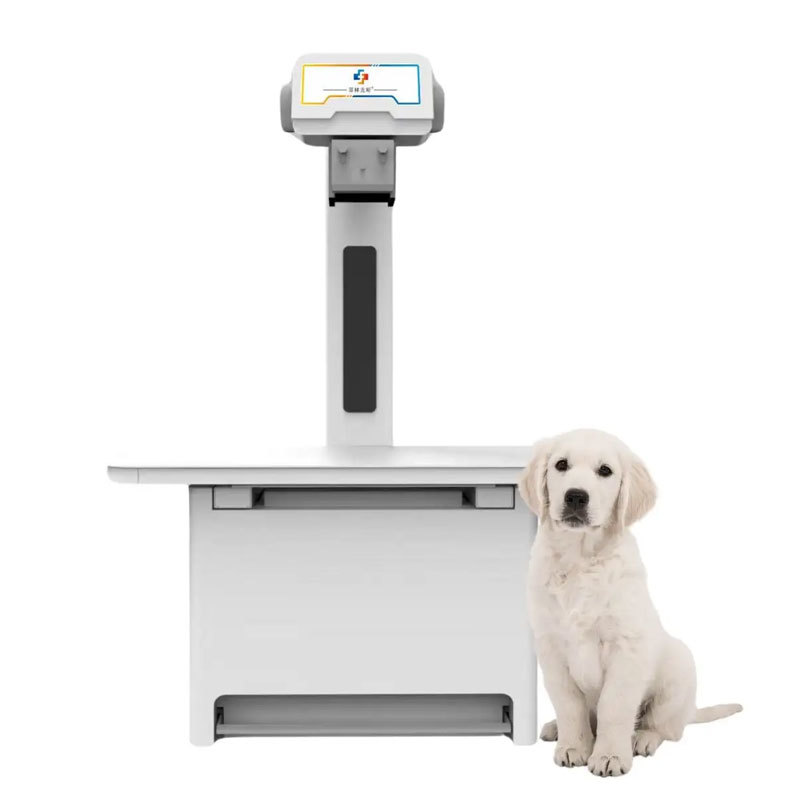
Revolutionizing Animal Care: The Advantages of Digital Veterinary X-ray Systems





Address
No. 16, Phase IV, International Leather City, Xinji City, Hebei Province, China