



Revolutionizing Medical Imaging with Portable X-ray Machines
2026-01-19


Portable X-ray Machine is a groundbreaking solution that brings flexibility, mobility, and efficiency to modern medical imaging. Designed for healthcare professionals who require reliable diagnostic tools in diverse environments, this device enables high-quality radiographic imaging without the limitations of traditional stationary X-ray systems. Hospitals, clinics, emergency response units, and remote healthcare facilities benefit from its portability, rapid deployment, and ease of use, making it a vital asset for improving patient care and diagnostic accuracy.
In medical practice, timely and accurate imaging is critical for diagnosis, treatment planning, and patient monitoring. Traditional fixed X-ray systems, while powerful, can limit workflow due to their immobility and infrastructure requirements. A portable X-ray machine solves this challenge by offering a compact, lightweight design that can be transported easily between departments, patient rooms, or field locations. Its versatility ensures that patients who are immobile, critically ill, or in remote locations can still receive essential diagnostic imaging without delays, reducing treatment time and improving outcomes.
One of the primary advantages of a portable X-ray machine is its advanced imaging technology. Equipped with high-resolution detectors, optimized radiation output, and intelligent software, it delivers crisp and accurate images suitable for a wide range of applications including chest radiography, orthopedic imaging, and trauma assessment. The device is engineered to minimize radiation exposure for both patients and operators, adhering to strict safety standards while maintaining diagnostic clarity. The combination of image quality, safety, and speed makes it ideal for busy healthcare environments where efficiency and precision are critical.

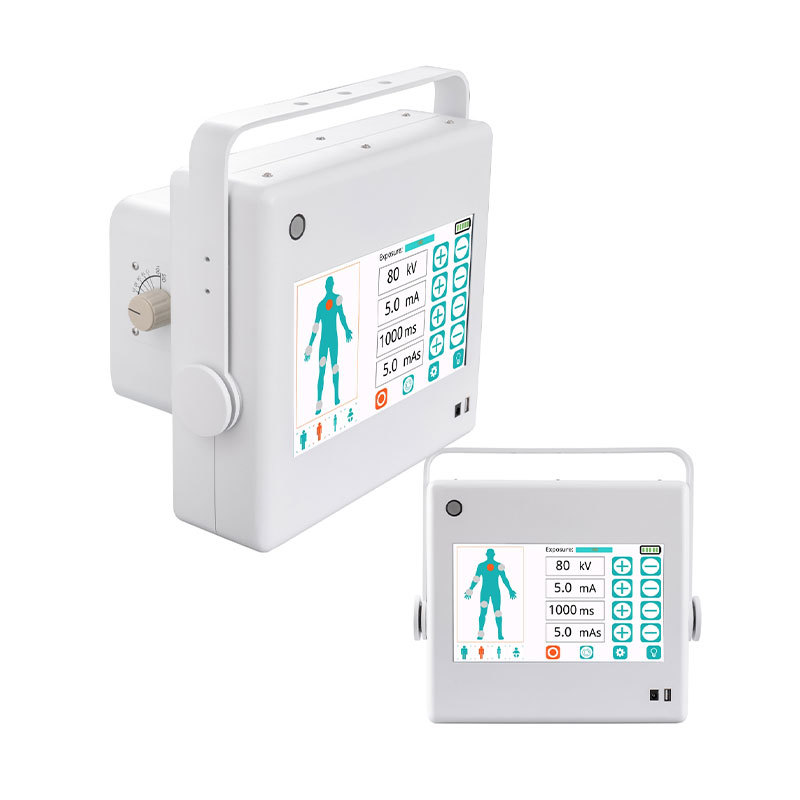
In addition to its imaging capabilities, portability and ease of use are major benefits. Modern units feature intuitive touchscreen interfaces, simple controls, and fast setup procedures, allowing medical staff to operate the device with minimal training. Long-lasting batteries and durable construction enable extended field use and reliable performance in demanding conditions, including emergency rooms, disaster sites, mobile clinics, and military healthcare operations. Compatibility with digital imaging systems and cloud-based storage further enhances workflow efficiency, enabling immediate image transfer, sharing, and telemedicine applications.
A key feature of the portable X-ray machine is its ability to address common pain points in medical imaging. Hospitals often face bottlenecks due to limited fixed X-ray units, leading to delays in patient care and increased wait times. Critically ill or immobile patients may require complicated transportation to radiology departments, adding stress and risk. By bringing the imaging system to the patient, portable X-ray machines reduce these challenges, streamline workflow, and enhance patient comfort. Staff can capture high-quality images at the bedside or on-site, improving operational efficiency and enabling faster clinical decision-making.
A practical example illustrates the device’s impact. A regional emergency response team deployed portable X-ray machines during a natural disaster where conventional hospital facilities were inaccessible. Medical staff were able to perform immediate imaging on injured patients, identifying fractures, chest injuries, and internal complications efficiently. The mobility and quick setup of the devices ensured that care was provided without delay, significantly improving patient triage and treatment outcomes. Similarly, in a busy urban hospital, portable X-ray units have reduced congestion in radiology departments, improved patient throughput, and enhanced diagnostic response times, demonstrating their versatility across both routine and emergency applications.
Furthermore, the portable X-ray machine supports a wide range of clinical applications, including orthopedic assessment, chest imaging, ICU monitoring, and pre-surgical evaluations. Its lightweight design, durable materials, and advanced safety features make it suitable for frequent transport and heavy use, while its digital connectivity supports integration with hospital information systems and remote consultations. By providing immediate access to high-quality imaging, healthcare providers can make more informed decisions, reduce diagnostic errors, and improve overall patient outcomes.
In summary, portable X-ray machines are transforming the way medical imaging is delivered. Their combination of mobility, high-resolution imaging, ease of use, safety, and connectivity addresses the limitations of traditional stationary systems while solving real-world pain points in hospitals, clinics, and field operations. By enabling on-site diagnostics, reducing patient transport, and streamlining workflow, they enhance operational efficiency, patient comfort, and clinical decision-making. Investing in a portable X-ray machine is not just an upgrade to imaging technology; it is a strategic step toward faster, safer, and more flexible healthcare delivery.
Related Posts
Revolutionizing Animal Care: The Advantages of Digital Veterinary X-ray Systems



Address
No. 16, Phase IV, International Leather City, Xinji City, Hebei Province, China